What Size Aquarium Do You Actually Need?
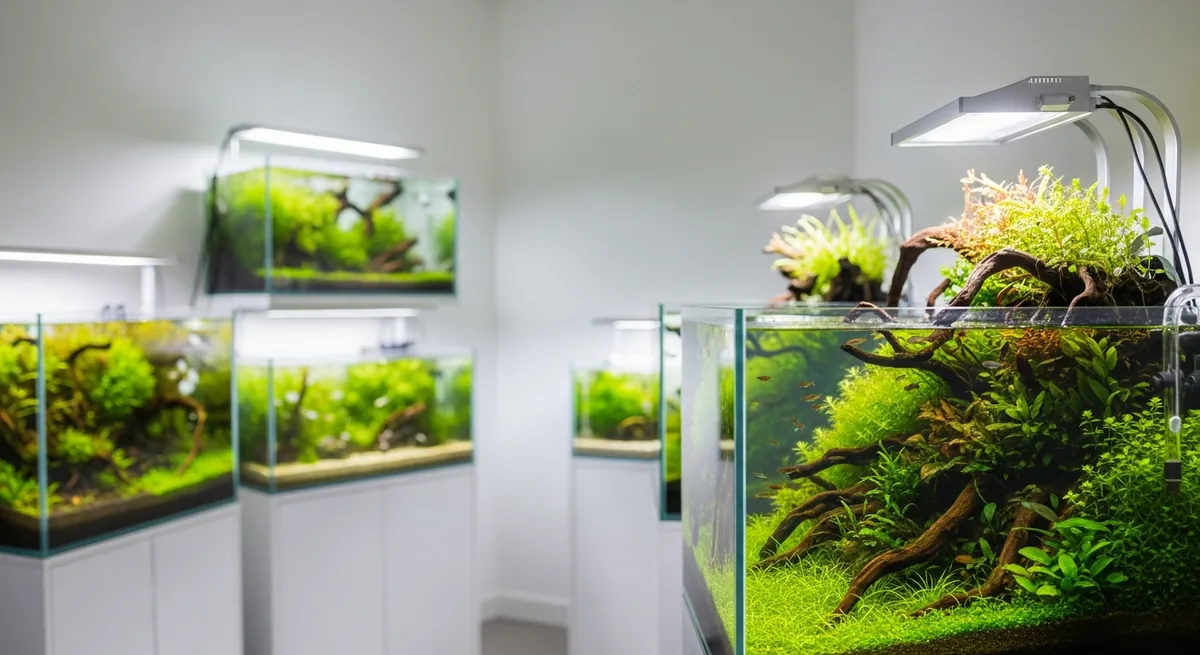
Short answer: A 10-gallon tank is the most common single size real keepers use. Across 5,134 real tanks, the median is 20 gallons, 96% are 5 gallons or larger, and the middle 50% fall between 10 and 50 gallons.
The single most common tank size is 10 gallons. Across 5,134 real tanks in the AquaGauge dataset (July 2026 snapshot), 18% are exactly 10 gallons and the median is 20 gallons — and 10 gallons lines up with what experienced fishkeepers recommend for beginners.
What real keepers actually use
| Size bracket | % of 5,134 tanks |
|---|---|
| Under 5 gal | 4% |
| 5 gal | 14% |
| 6-9 gal | 3% |
| 10 gal | 18% |
| Over 10 gal | 61% |
The middle 50% of tanks (Q1 to Q3) fall between 10 and 50 gallons. The mean is 39 gallons, pulled up by a small number of very large setups (the biggest in the data is 1,200 gallons); the median of 20 gallons better represents a typical keeper.
96% of tanks are 5 gallons or larger. The under-5-gallon group (4%) is almost entirely nano shrimp jars and betta bowls that most keepers later upgrade.
Why 10 gallons works
A 10-gallon tank is big enough to hold stable temperature and pH between water changes, small enough to fit on a desk or dresser, and cheap. A basic kit (tank, lid, filter, heater) runs under $50.
It supports a single betta, a small school of nano fish like neon tetras, or a thriving shrimp colony. For species-specific sizing, see what size tank a betta needs or what size tank shrimp need. The classic aquarium author William T. Innes gave the same size a concrete stocking example: “The proper rule is this : One inch OF FISH TO ONE GALLON OF WATER. That is, in a ten-gallon aquarium of the usual oblong shape, well planted and in a good light, one could successfully keep ten one-inch fish, or five two-inch or two five-inch fish.”1
When to go bigger
20 gallons is the next common jump (14% of tanks are exactly 20 gallons, and it is the median across the whole dataset), and it is also the median for planted tanks specifically (n = 436). Consider 20+ gallons if you want:
- A mixed community (tetras + corydoras + a centerpiece fish)
- Larger species like angelfish, gouramis, or plecos
- More stable water with less frequent maintenance
Once you have picked a volume, the shape still matters: a 20-gallon long and a 20-gallon high hold the same water but differ by a quarter in floor area. For the physical measurements and water weight of every standard size, see aquarium dimensions by size.
Larger volume dilutes waste faster, so parameters drift less between water changes, which keeps nitrate lower per fish.3 The reasoning is old advice as well as data: as Innes put it, “Since it is very little more trouble to keep a large-sized aquarium than a small one, and the results are so much better, at least with goldfishes, we would unhesitatingly say to those weighing the merits of two sizes, take the larger.”1
When 5 gallons is enough
A 5-gallon tank is one of the most common sizes (14% of all tanks). It works well for:
- One betta with a heater and sponge filter
- A cherry shrimp colony
- A planted nano tank with no fish
Below 5 gallons, temperature and ammonia swing too fast for most livestock, and ammonia is acutely toxic to fish even at low concentrations.4 Only 4% of real keepers go smaller. Even early hobby authorities flagged how quickly small tanks overheat; Innes warned that “Direct sun in the summer months is dangerous to small aquaria, as it is liable to raise the temperature too high for the fishes.”2
How we counted
We analyzed 5,134 freshwater tanks posted across 12 aquarium subreddits (r/Aquariums, r/bettafish, r/shrimptank, r/PlantedTank, and others). Each entry includes the tank’s reported gallon size. The dataset spans 2010 to 2025.
Methodology details: /methodology/
Example source posts:
Figures are from the July 2026 snapshot (6,414 tanks total).
Use the stocking calculator to check whether your planned fish fit your tank, or the volume calculator to convert tank dimensions to gallons.
Check your exact stocking
Add your fish below to see stocking %, filtration load and compatibility for your setup — live.
Stocking — under 85% comfortable · 85–100% full · over 100% overstocked
Show the math
Gear for this setup
As an Amazon Associate AquaGauge earns from qualifying purchases. Some links below are affiliate links, at no extra cost to you. Current price and availability are shown on Amazon. Disclosure.
 Tetra 10 Gallon Complete Aquarium KitBundles the tank, lid, filter, and LED light in the 10-gallon size this page recommends for beginners.Check price on Amazon →
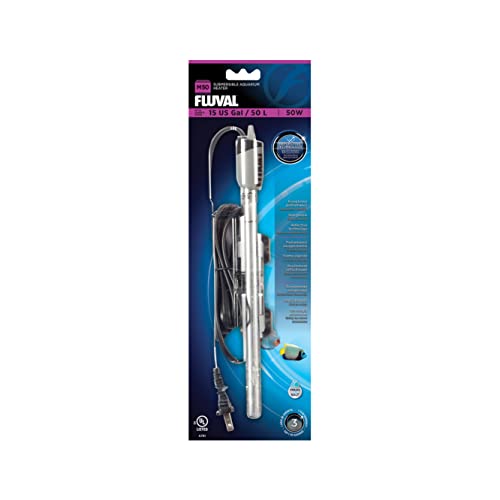 Fluval M 50 W Submersible HeaterHolds steady temperature in a 10-gallon tank so chemistry stays stable between water changes.Check price on Amazon →
FAQ
- What is the best tank size for a beginner?
- A 10-gallon tank. It is the single most common size in our data (18% of 5,134 real tanks), holds water chemistry steadier than anything smaller, and fits a heater, filter, and a small community. It is also cheap and easy to find.
- Is a 5-gallon tank big enough?
- For a single betta or a shrimp colony, yes. 14% of real tanks in our data are 5 gallons. It is the practical minimum for a heated, filtered setup.
- Does a bigger tank mean less maintenance?
- Generally yes. Larger water volume dilutes waste and buffers temperature swings, so parameters stay stable longer between water changes.
- What size tank do I need for a community?
- At least 10 gallons for small species like neon tetras or corydoras. For larger or more active fish, 20 gallons or more gives enough swimming room and dilutes bioload.
Sources
- Goldfish Varieties and Tropical Aquarium Fishes.
- The Complete Aquarium Book.
- Nitrogen and Water Quality, University of Rhode Island Cooperative Extension (URI Watershed Watch). View source ↗
- Aquatic Life Criteria - Ammonia, U.S. Environmental Protection Agency. View source ↗

Freshwater aquarist of 8+ years.