How to Lower Nitrates in a Fish Tank
Short answer: The fastest way to lower aquarium nitrates is a 30–50% water change, which cuts the level in proportion to the volume you swap. Long-term, feed less, avoid overstocking, add live plants, and keep up regular changes. Keep nitrate under 40 ppm; under 20 is better.
Nitrate at a glance
| Nitrate (NO₃) in 1,015 real tanks (July 2026 snapshot) | Value |
|---|---|
| Median | 10 ppm |
| Middle 50% (IQR) | 0.5–20 ppm |
| Tanks under 20 ppm | 83% |
| Tanks over 40 ppm | 6.2% |
| Recommended target | under 40 ppm (under 20 better) |
The fastest way to lower a high reading is a 30–50% water change; the steps below keep it down for good.
Why nitrates build up
Nitrate (NO₃) is the end product of the nitrogen cycle: fish waste and leftover food become ammonia, beneficial bacteria turn that into nitrite, then into nitrate. Ammonia and nitrite are toxic and should read 0 in a cycled tank. Nitrate is far less toxic, but your filter leaves it in the water, so it climbs between water changes. As the University of Rhode Island Cooperative Extension explains, “Denitrification is the only process that completely removes N from the soil-water environment.”1 That process needs anoxic conditions a normal aerobic filter never creates, which is why nitrate keeps building until you remove it. Rising nitrate is normal. It tells you when to change water.
How to lower it
- Change water. Nitrate dilutes in proportion to what you replace, so a 50% change halves it. Size yours with the calculator above, then refill with dechlorinated, temperature-matched water.
- Feed less and remove waste. Overfeeding is the #1 hidden source. Feed what the fish clear in 1–2 minutes, skip a day each week, and siphon old food and detritus from the substrate.
- Reduce the bioload. An overstocked tank makes nitrate faster than you can change it. Check your numbers in the stocking calculator; anything over ~100% is your nitrate engine.
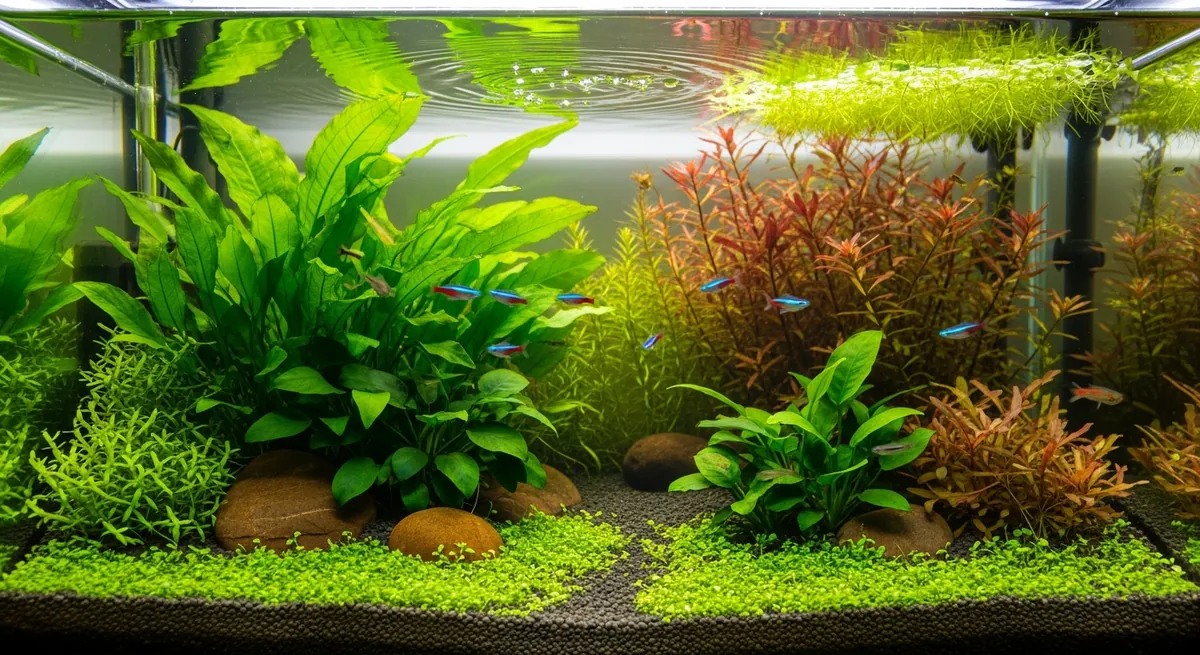
- Add live plants. Plants take up nitrate as fertiliser. Fast growers like hornwort, pothos, and floating plants pull the most. The University of Rhode Island Cooperative Extension notes that “Nitrate and ammonium get converted to organic N via plant uptake and immobilization (microbial uptake of nitrogen). When abundant, ammonium is preferred by plants over nitrate.”1 In other words plants do strip nitrate, but they reach for ammonia first, so live plants slow the build-up rather than replacing water changes.
- Check your tap water. Some municipal water already carries 10–40 ppm nitrate, so test it.2 If your source runs high, water changes help less and live plants or RO water matter more.
- Nitrate-removing media (last resort). Resins and reactors treat the symptom, not the cause. Fix feeding, stocking, and plants first.
Based on real tanks
The AquaGauge dataset includes 1,015 real tanks across 12 aquarium subreddits that posted a nitrate reading (July 2026 snapshot). The median was 10 ppm (middle half sat between 0.5 and 20 ppm), and about 6% read over 40 ppm. Well-kept tanks sit low. If you read 40+ ppm, change water more often and feed less to bring it down. (These readings lean toward keepers fixing a problem, so treat the high end as worst-case.)
Safe levels (freshwater)
| Parameter | Target |
|---|---|
| Ammonia | 0 ppm |
| Nitrite | 0 ppm |
| Nitrate | under 40 ppm (under 20 is better) |
If ammonia or nitrite reads above 0, your tank isn’t cycled yet, which is a more urgent problem than nitrate.
Calculate your water change
Show the math
FAQ
- What is a safe nitrate level for a fish tank?
- Keep it under 40 ppm for most community fish. Aim for under 20 ppm; shrimp and sensitive species prefer it lower.
- How often should I change water to keep nitrates low?
- Most tanks do well with a 25–50% weekly change. Heavily stocked tanks need more; planted or lightly stocked tanks need less. Let your test kit, not the calendar, decide.
- Do live plants lower nitrates?
- Yes. Plants use nitrate as a nutrient. They won't replace water changes, but they slow the build-up between them.
- Does the filter remove nitrates?
- No. A standard filter converts ammonia to nitrite to nitrate but leaves the nitrate in the water. Only water changes, live plants, or special media remove it.
- Will lowering nitrates fix algae?
- It helps, though algae also feeds on light and phosphate. Lower the nitrate and cut your light duration too.
Sources
- Nitrogen and Water Quality, University of Rhode Island Cooperative Extension (URI Watershed Watch). View source ↗
- Basic Information on Nutrient Pollution, U.S. Environmental Protection Agency (EPA). View source ↗

Freshwater aquarist of 8+ years.