How Many Corydoras in a Tank?
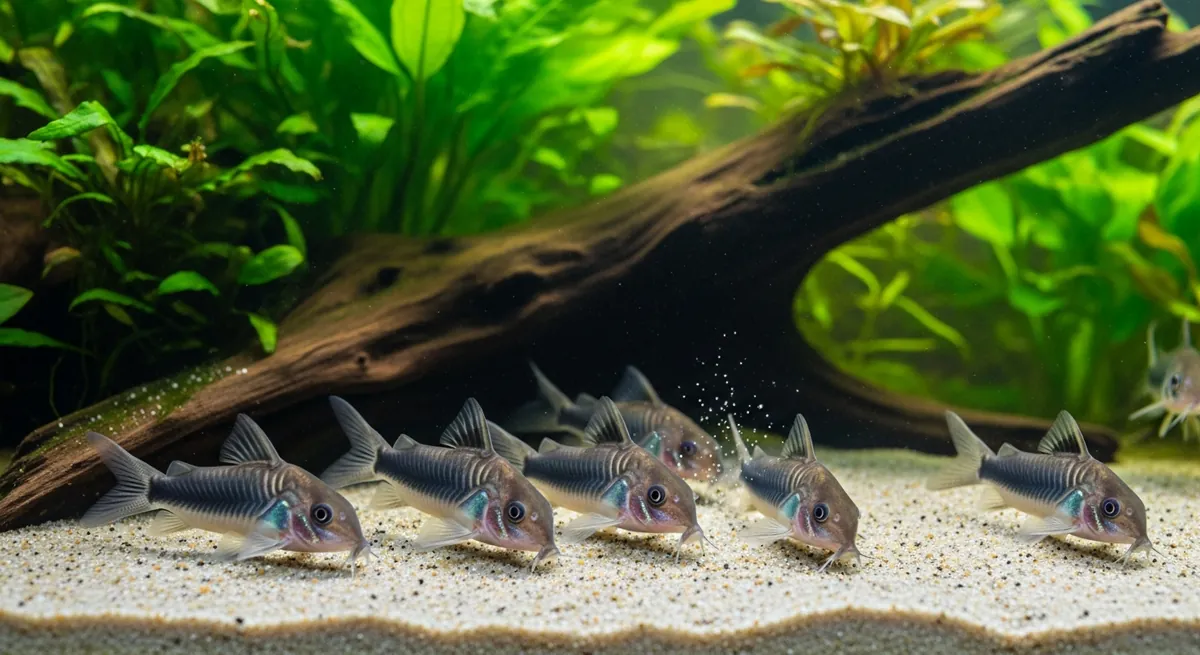
Short answer: Keep at least 6 corydoras in a 20-gallon or larger tank. Across 173 real tanks, the median group in a 20-gallon is 5, and keepers with 40+ gallons stock a median of 6. Here is the full breakdown by tank size.
Corydoras catfish at a glance
- Scientific name
- Corydoras sp.
- Adult size
- ~2.5″
- Temperature
- 72–80°F
- pH
- 6–7.5
- Minimum tank
- 20 gal
- Temperament
- peaceful
- Social
- schooling — keep 6+
- Reference
- Wikipedia
Keep at least 6 corydoras in a 20-gallon or larger tank. They are social shoaling catfish that hide and stress when kept alone or in pairs. Across 173 real tanks in the AquaGauge dataset (July 2026 snapshot), the median group in a 20-gallon is 5 (in community setups), and keepers with 40+ gallons stock a median of 6.
How many corydoras at a glance
| Guideline | Authority | Real tanks (AquaGauge) |
|---|---|---|
| Minimum group | at least 6 ("half a dozen")3 | median 5 in a 20-gal (71 tanks) |
| Adult size | 6.5–7.5 cm3 | — |
ScotCat recommends keeping at least six; in real 20-gallon community tanks the median is 5 (sharing the tank with other fish), trending to 6 in 40-gallon-plus setups.
What real keepers actually stock
We pulled 173 corydoras setups with reported tank sizes from the AquaGauge dataset of real tanks compiled from 12 aquarium subreddits, including r/aquariums, r/plantedtank, and r/corydoras. Most are community tanks, so the corydoras counts reflect shared bioload budgets.
| Tank size | Setups | Median cories | Range |
|---|---|---|---|
| 5 gal or under | 4 | 4 | 2-6 |
| 6-10 gal | 32 | 3.5 | 1-8 |
| 11-20 gal | 71 | 5 | 1-20 |
| 21-40 gal | 25 | 5 | 2-11 |
| Over 40 gal | 41 | 6 | 1-25 |
The per-gallon median across all 173 sized tanks is 0.2 corydoras per gallon. That ratio stays low because keepers split their stocking budget across multiple species.
The bioload math
Each corydoras adds 1.5 bioload units. A 20-gallon tank handles roughly 20 units total with standard filtration.
- Corydoras-only tank (20 gal): 20 / 1.5 = 13 fish max. That is a generous school with room for water changes to keep up.
- Community tank (20 gal): subtract tankmates first. A school of 6 neon tetras (0.8 each = 4.8 units) plus 6 corydoras (9.0 units) totals 13.8, leaving a small buffer.
- Safe default: 6-8 corydoras in a 20-gallon community, which matches what real keepers do.
In tanks of 10 gallons or under, the data shows keepers stock a median of just 3-4 corydoras, well below the minimum school of 6. That is why standard corydoras species need a 20-gallon or larger footprint.
Why 6 is the minimum
Corydoras are obligate shoalers.2 In a group of 6 or more they forage in the open, ripple across the sand together, and display their natural “nose-down sifting” feeding. Fewer than 6 and they hide behind hardscape, eat less, and are more prone to disease from chronic stress. If your tank only fits 4, consider pygmy corydoras (0.4 bioload, 10-gallon minimum) instead.
Substrate matters
Corydoras feed by plunging their barbels into the substrate and sifting for food.1 Sharp gravel grinds down the barbels and opens the door to bacterial infections. Use soft sand. The number of corydoras you stock is secondary if the substrate is wrong: even 6 healthy fish on sharp gravel will develop worn barbels within months.
How we counted
We analyzed 289 corydoras tank reports (173 with reported tank size) from the AquaGauge dataset of 6,414 real tanks compiled from public posts across 12 aquarium subreddits (including r/aquariums, r/plantedtank, and r/corydoras). Keepers self-reported tank size, species, and counts. We cross-check the recommended range against the stocking calculator’s bioload model. Full methodology at /methodology/. Figures are from the July 2026 snapshot (6,414 tanks total).
Check your exact stocking
Add your fish below to see stocking %, filtration load and compatibility for your setup — live.
Planning a Corydoras catfish tank. We start with your corydoras catfish and filter the list to compatible tankmates — untick to see every species (incompatible ones get flagged).
Stocking — under 85% comfortable · 85–100% full · over 100% overstocked
Show the math
Gear for this setup
As an Amazon Associate AquaGauge earns from qualifying purchases. Some links below are affiliate links, at no extra cost to you. Current price and availability are shown on Amazon. Disclosure.
 Aqua Natural Sugar White Sand (10 lb)Smooth, barbel-safe aquarium sand that lets corydoras sift naturally without abrasion.Check price on Amazon →
 AQUANEAT Bio Sponge Filter (up to 20 gal)Gentle flow that won't blast bottom-dwellers off the sand, and safe for fry.Check price on Amazon →
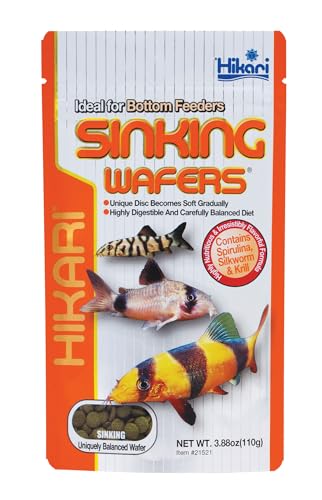 Hikari Sinking Wafers (3.88 oz)The go-to sinking wafer for corydoras and loaches; breaks apart slowly so the school can graze.Check price on Amazon →
FAQ
- Can I keep corydoras in a 10-gallon tank?
- Standard corydoras species are too active and too large for a 10-gallon. Real keepers who try it stock a median of just 3-4 fish, well below the minimum school of 6. Pygmy corydoras (Corydoras pygmaeus) work in a 10-gallon because they stay under an inch.
- Is 6 corydoras enough?
- Six is the minimum school size. They shoal tighter, forage more openly, and show less stress in groups of 6 or more. More is better if your tank and filtration allow it.
- How many corydoras in a 20-gallon tank?
- Six to eight. A 20-gallon gives enough floor space for a full school, and the bioload math allows up to 13 at 1.5 units each. Most keepers land around 5 in practice because they share the tank with other species.
- Do all corydoras species need the same group size?
- Yes, all corydoras are social shoalers and need at least 6. The difference is tank size: standard species like bronze or peppered corydoras need 20 gallons, while pygmy corydoras fit in 10 gallons.
Sources
- Corydoras aeneus (Bronze Corydoras), FishBase. View source ↗
- Corydoras aeneus, Seriously Fish. View source ↗
- ScotCat catfish factsheets, ScotCat (electronic publication) (2025). View source ↗

Freshwater aquarist of 8+ years.