How Long Do Corydoras Live?
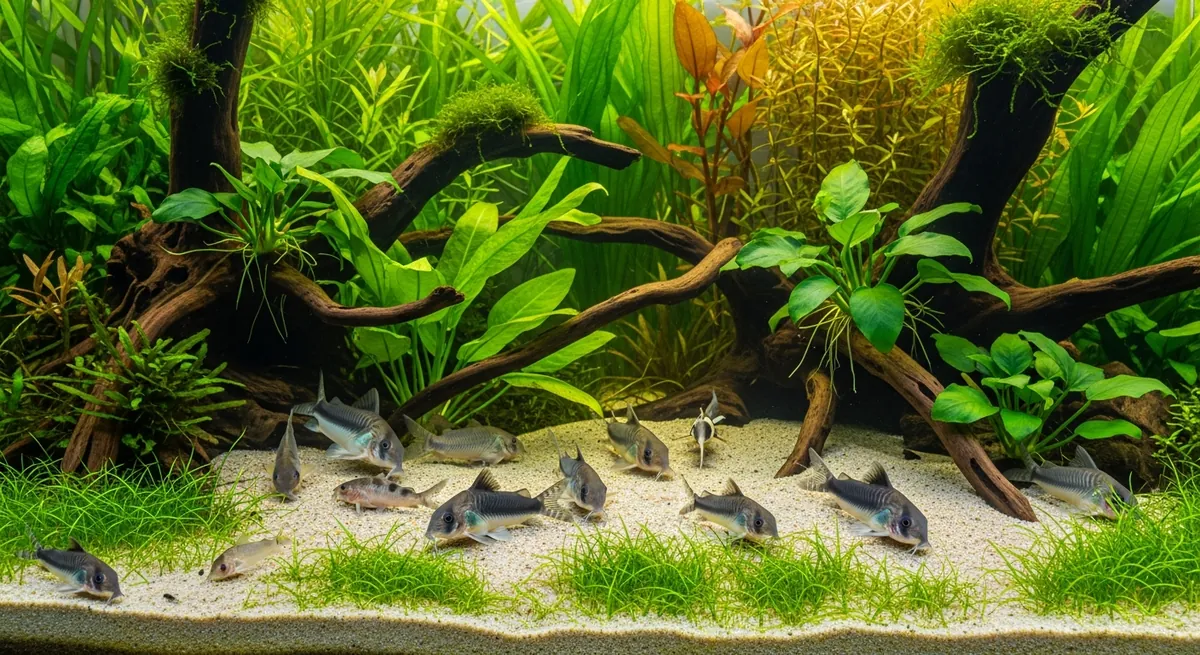
Short answer: Corydoras are long-lived for small fish. Common species like bronze and peppered cory often reach 10-15 years (sometimes 20) with good care, while nano species like the pygmy cory live about 3-4 years. The genus average is 5-15 years — far longer than most keepers expect.
Corydoras catfish at a glance
- Scientific name
- Corydoras sp.
- Adult size
- ~2.5″
- Temperature
- 72–80°F
- pH
- 6–7.5
- Minimum tank
- 20 gal
- Temperament
- peaceful
- Social
- schooling — keep 6+
- Reference
- Wikipedia
Corydoras are long-lived for small fish. The common species — the bronze and peppered corys — often reach 10-15 years, and sometimes 20, with good care. Nano species like the pygmy cory live about 3-4 years. Across the genus, 5-15 years is normal: far longer than the throwaway “cleaner fish” reputation suggests.
The lifespan figures below are the ranges experienced keepers and catfish authorities consistently report, reviewed by our catfish reviewer, Allan James of ScotCat.
Corydoras lifespan by species
The flat “5 to 10 years” you’ll see online hides a big spread — size is the main driver, with the larger common species living roughly twice as long as the nano ones.
| Species | Typical lifespan (good care) |
|---|---|
| Pygmy (nano) | ~3-4 years |
| Panda | ~5+ years |
| Julii / trilineatus | ~5-10 years |
| Sterbai | ~5-8 years |
| Bronze (C. aeneus) | 10-20 years |
| Albino (= bronze) | 10-20 years |
| Peppered (C. paleatus) | 10-20 years |
| Genus average | 5-15 years |
These are husbandry-consensus ranges, not guarantees — the number you actually get is set by the care below, not the species alone.
Why corydoras lifespans are usually underestimated
Most corys that die “young” die of their environment, not old age. They are sold cheaply and marketed as a clean-up crew, so they often land in sharp gravel, unstable or uncycled water, in ones and twos, and underfed — every one of which shortens life. Treated as the long-term community fish they are, a healthy cory is a decade-plus commitment, on par with keeping a betta several times over.
What decides how long your corydoras live
In rough order of impact:
- Stable, clean water. The biggest lever. Corys live on the bottom where waste settles, so a cycled tank, routine water changes, and steady parameters do more for lifespan than anything else.2 Track them with a test kit; see our corydoras water parameters breakdown.
- Soft sand, not sharp gravel. They feed by sifting substrate through their barbels; coarse gravel wears those barbels down and invites the infections that cut lives short.2
- A group of six or more. Social fish kept in numbers are less stressed and forage normally; lone corys do poorly. See how many corydoras in a tank.
- A varied, complete diet. Corys are scavengers, not an algae crew, and cannot live on leftovers alone — feed them directly.
- The right temperature for the species. Cool-water species like panda kept too warm, or warm-water sterbai kept too cool, age faster. Match the species.
Signs of a healthy vs an aging cory
A thriving cory is active and out foraging, with clear eyes, intact barbels, a rounded belly, and a quick dart to the surface for an occasional gulp of air (normal, not distress). Warning signs of stress, illness, or age include worn or missing barbels, clamped fins, lethargy or hiding, a sunken belly, reddened skin, or laboured gasping. Most are environmental and reversible if you catch them early — test the water first.
Give them a long life
Cycle the tank, keep the water stable and clean, use soft sand, keep a group of six or more at the right temperature, and feed a varied sinking diet. Do that and a corydoras is one of the longest-lived community fish you can keep. Plan a balanced, non-overstocked tank in the stocking calculator.
Check your exact stocking
Add your fish below to see stocking %, filtration load and compatibility for your setup — live.
Planning a Corydoras catfish tank. We start with your corydoras catfish and filter the list to compatible tankmates — untick to see every species (incompatible ones get flagged).
Stocking — under 85% comfortable · 85–100% full · over 100% overstocked
Show the math
Gear for this setup
As an Amazon Associate AquaGauge earns from qualifying purchases. Some links below are affiliate links, at no extra cost to you. Current price and availability are shown on Amazon. Disclosure.
 Aqua Natural Sugar White Sand (10 lb)Soft, barbel-safe sand prevents the worn barbels and infections that shorten lives on sharp gravel.Check price on Amazon →
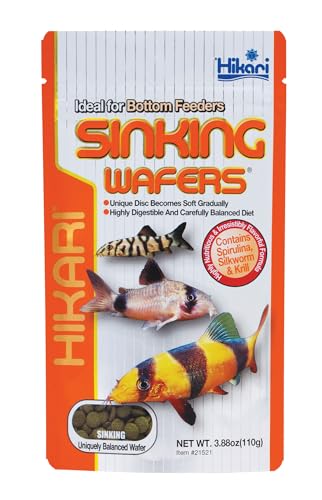 Hikari Sinking Wafers (3.88 oz)A varied, nutritionally complete sinking staple keeps corys in long-term condition rather than scraping by on leftovers.Check price on Amazon →
 AQUANEAT Bio Sponge Filter (up to 20 gal)Gentle, stable biological filtration for clean bottom water without blasting the fish — steady conditions add years.Check price on Amazon →
FAQ
- How long do cory catfish live in a tank?
- Most common corydoras (bronze, peppered, albino) live 10-15 years in a well-kept tank, sometimes 20. Smaller species live less — pygmy corys around 3-4 years. The genus average is 5-15 years. Stable water and a soft sand bottom matter more than any single number.
- Why did my corydoras die so young?
- Usually environment, not bad luck. Corys are often sold cheap as 'cleaners' and kept on sharp gravel, in unstable or uncycled water, alone, or underfed — all of which cut years off their life. In good conditions a healthy cory is a decade-plus commitment.
- Which corydoras lives the longest?
- The hardy common species — bronze (Corydoras aeneus, including the albino strain) and peppered (C. paleatus) — are the longest-lived, commonly 10-20 years. Nano species like pygmy and hastatus are the shortest.
- Do corydoras live longer in a group?
- They do better in a group of six or more — less stress, more natural foraging, fewer stress-related health problems. A lone or paired cory hides, eats poorly, and tends not to thrive.
Sources
- Corydoras aeneus (Bronze Corydoras), FishBase. View source ↗
- Corydoras aeneus, Seriously Fish. View source ↗
- ScotCat catfish factsheets, ScotCat (electronic publication) (2025). View source ↗

Freshwater aquarist of 8+ years.