Corydoras Tank Mates
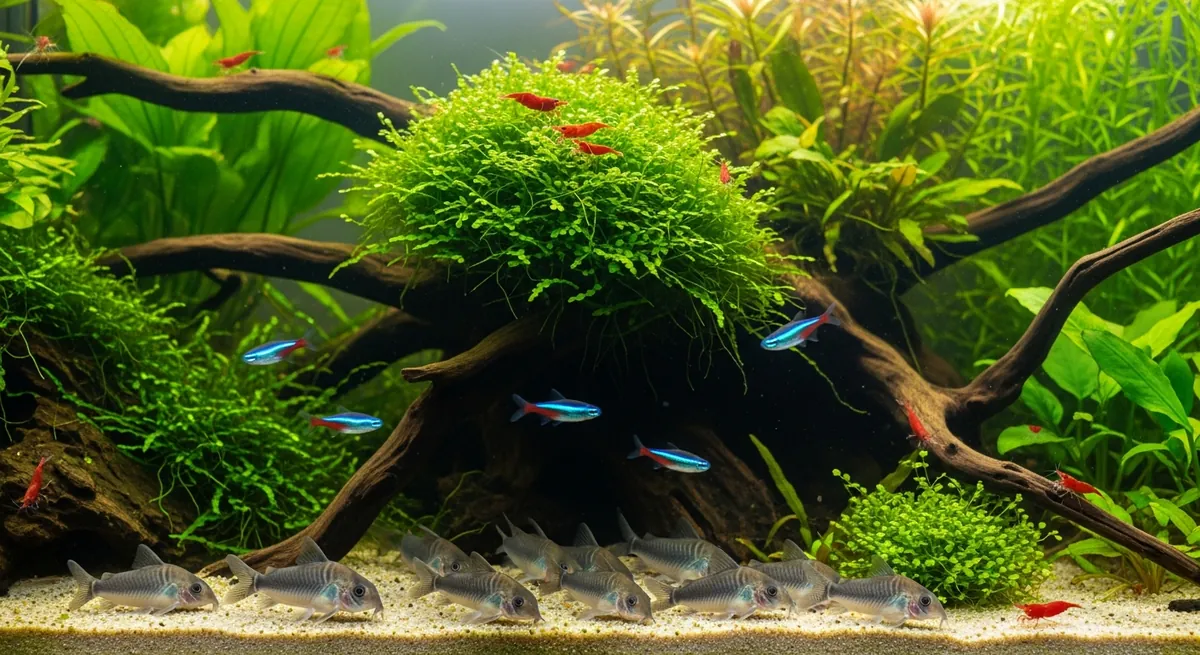
Short answer: The best corydoras tank mates are peaceful mid-water schoolers: neon tetras, ember tetras, harlequin rasboras, otocinclus, and cherry shrimp. Avoid fin nippers like tiger barbs. From 676 real cory keeper tanks and the AquaGauge compatibility model.
Corydoras catfish at a glance
- Scientific name
- Corydoras sp.
- Adult size
- ~2.5″
- Temperature
- 72–80°F
- pH
- 6–7.5
- Minimum tank
- 20 gal
- Temperament
- peaceful
- Social
- schooling — keep 6+
- Reference
- Wikipedia
The best corydoras tank mates are peaceful mid-water fish that share warm, soft-to-neutral water: neon tetras, ember tetras, harlequin rasboras, otocinclus, and cherry shrimp. Avoid fin nippers like tiger barbs and serpae tetras. Corydoras are peaceful bottom dwellers that ignore everything above them, so the real question is which fish will leave them alone.
Corydoras at a glance
Bronze cory (Corydoras aeneus) as the representative species; data per ScotCat and FishBase.13
| Attribute | Authority | Real tanks (AquaGauge) |
|---|---|---|
| Adult size | 6.5-7.5 cm3 | - |
| Temperature | 20-27 C (67-81 F)3 | median 78 F (37 tanks) |
| pH | 6.5-7.23 | median 7.5 (76 tanks) |
| Temperament | peaceful bottom dweller2 | - |
| Key compat trait | not a fin nipper, not a predator | flagged peaceful in compat model |
"Real tanks" = medians from our corydoras water-parameter data (676 r/corydoras tanks, July 2026 snapshot; tank counts per reading shown in the table).
Why corydoras are easy to pair
Corydoras have no compatibility red flags. They are not fin nippers, not predators, and not territorial. They stay on the substrate, forage in groups, and ignore mid-water and surface fish entirely. Seriously Fish describes Corydoras aeneus as “one of the most suitable choices for the community aquarium.”2
The main constraint is water parameters: corydoras prefer 72-80 F and pH 6.0-7.5.1 Any tank mate needs to overlap that range. Cold-water species (goldfish, white cloud minnows) and high-heat species (discus at 82-86 F) fall outside it.
What real corydoras keepers actually keep together
Across 676 posts from r/corydoras in the AquaGauge dataset (July 2026 snapshot), 525 tanks named at least one species they keep. The top pairings:
| Companion | Tanks reporting | Compat verdict | Why it works (or doesn’t) |
|---|---|---|---|
| Shrimp | 104 | Good | Peaceful invert, 65-80 F. Corydoras are not predators; adult shrimp are safe. |
| Guppy | 53 | Good | Peaceful, 72-82 F, pH 6.8-7.8. Long-finned but corydoras are not nippers. |
| Neon tetra | 51 | Good | Peaceful schooler, 70-81 F, pH 5.0-7.0. The classic pairing. |
| Snails (nerite/mystery) | 46 | Good | No conflict. Snails occupy surfaces, corydoras occupy substrate. |
| Otocinclus | 39 | Good | Peaceful algae eater, 72-79 F, pH 6.0-7.5. Same bottom/glass zone but zero aggression. |
| Cardinal tetra | 26 | Good | Peaceful schooler, 73-81 F, pH 4.5-6.5. Mid-water; overlaps at 73-80 F. |
| Ember tetra | 18 | Good | Peaceful nano schooler, 73-84 F, pH 5.5-7.0. Mid-water. |
| Kuhli loach | 15 | Good | Peaceful, 73-86 F. Both are bottom dwellers, but kuhli loaches are nocturnal so they time-share the substrate. |
| Betta | 14 | Conditional | Aggressive temperament, 76-82 F. Works when the betta is calm. Bottom dwellers are the safest betta companions. |
| Molly | 8 | Good | Peaceful, 72-82 F, pH 7.0-8.2. Overlaps at 72-80 F and pH 7.0-7.5. |
The full compatibility model
We ran every species in the AquaGauge database against corydoras. The model checks temperature overlap, predation risk, fin-nipping conflicts, and pH compatibility.
| Species | Verdict | Why |
|---|---|---|
| Neon tetra | Good | Peaceful, 70-81 F overlaps at 72-80 F. pH 5.0-7.0 overlaps at 6.0-7.0. Mid-water schooler, zero conflict. |
| Ember tetra | Good | Peaceful, 73-84 F overlaps at 73-80 F. pH 5.5-7.0 overlaps at 6.0-7.0. |
| Cardinal tetra | Good | Peaceful, 73-81 F overlaps at 73-80 F. pH 4.5-6.5 overlaps at 6.0-6.5. |
| Harlequin rasbora | Good | Peaceful, 72-81 F full overlap. pH 6.0-7.5 full overlap. |
| Otocinclus | Good | Peaceful, 72-79 F overlaps. pH 6.0-7.5 full overlap. Both bottom zone but zero aggression. |
| Kuhli loach | Good | Peaceful, 73-86 F overlaps at 73-80 F. pH 5.5-7.0 overlaps at 6.0-7.0. |
| Cherry shrimp | Good | Peaceful, 65-80 F overlaps. Corydoras lack fishEater, so shrimp are safe. |
| Nerite snail | Good | Peaceful, 65-85 F, pH 6.5-8.5. Overlaps everything. Shell protection. |
| Mystery snail | Good | Peaceful, 68-82 F, pH 7.0-8.0. Overlaps at 72-80 F and pH 7.0-7.5. |
| Bristlenose pleco | Good | Peaceful, 72-82 F, pH 6.0-7.5. Full overlap. Both bottom zone but pleco is a grazer, not a competitor. |
| Guppy | Good | Peaceful, 72-82 F, pH 6.8-7.8. Overlaps at 72-80 F and pH 6.8-7.5. Long-finned but corydoras don’t nip. |
| Endler’s livebearer | Good | Peaceful, 72-82 F, pH 7.0-8.0. Overlaps at 72-80 F and pH 7.0-7.5. |
| Platy | Good | Peaceful, 70-82 F, pH 7.0-8.2. Overlaps at 72-80 F and pH 7.0-7.5. |
| Molly | Good | Peaceful, 72-82 F, pH 7.0-8.2. Overlaps at 72-80 F and pH 7.0-7.5. |
| Pygmy corydoras | Good | Same genus, peaceful, 72-79 F, pH 6.2-7.4. Can mix species in a large enough tank. |
| Dwarf gourami | Conditional | Semi-aggressive, 72-82 F, pH 6.0-7.5. May claim a territory near the bottom. Works in 20+ gallons with cover. |
| Betta | Conditional | Aggressive, 76-82 F, pH 6.5-7.5. Overlaps at 76-80 F. Individual temperament varies. Bottom dwellers are the safest betta companions, but some bettas attack anything. |
| Angelfish | Risky | Semi-aggressive fishEater, 76-84 F, pH 6.5-7.5. Adults may eat pygmy corydoras or fry. Works with larger cory species in a 40+ gallon tank, but the predation flag is real. |
| Tiger barb | Bad | Semi-aggressive finNipper. Harasses bottom dwellers and stresses corydoras into hiding. |
| Serpae tetra | Bad | Semi-aggressive finNipper. Nips at anything nearby, including bottom dwellers. |
| Zebra danio | Bad | Semi-aggressive finNipper, 64-77 F. Fin nipping plus a cooler temp preference (overlaps only 72-77 F). |
| Discus | Bad | Semi-aggressive, 82-86 F. No temperature overlap with standard corydoras (72-80 F). Exception: sterbai corydoras tolerate up to 82 F and are the classic discus companion. |
| Goldfish | Bad | fishEater, cold water 65-72 F. Double disqualifier: minimal temp overlap and goldfish eat small bottom dwellers. |
The best community build
A corydoras community works in layers:
Bottom: corydoras (6+). A group of 6 or more on soft sand in a 20-gallon tank is the foundation. The median cory keeper tank is 20 gallons (n=493).
Mid-water: a schooling tetra. 8-10 neon tetras or ember tetras fill the middle column with color. Both share the 72-80 F, pH 6.0-7.0 sweet spot. Add a second school (harlequin rasboras, cardinal tetras) in a 30+ gallon tank for depth.
Glass and surfaces: otocinclus. A group of 6 otocinclus handles algae and shares identical water parameters. They showed up in 39 of the real cory keeper tanks that named their livestock.
Cleanup crew: shrimp and snails. Cherry shrimp and nerite snails fill the gaps. Corydoras are not predators, so adult shrimp are safe. Dense plants protect shrimplets.
Run the stocking plan through the stocking calculator before adding fish. Each corydoras carries 1.5 bioload units. A 20-gallon handles 6 corydoras + 8 neon tetras + 4-6 cherry shrimp comfortably.
What to avoid
Fin nippers are the biggest threat. Tiger barbs, serpae tetras, and zebra danios chase and stress corydoras. Even though corydoras lack long fins, the constant harassment pushes them into hiding, stops them from foraging, and leads to weight loss and secondary infections.
Cold-water fish like goldfish operate at 65-72 F. The overlap with corydoras (72-80 F) is a single degree at best. See goldfish tank mates for why this never works.
High-heat fish like discus run at 82-86 F, above the corydoras ceiling of 80 F. The one exception is sterbai corydoras, which tolerate up to 82 F and are the standard corydoras choice for discus tanks.
Large cichlids are territorial and may injure or eat smaller corydoras. Angelfish are borderline: they work with larger cory species in big tanks, but the fishEater flag makes them a risk with dwarf corydoras.
How we counted
The compatibility verdicts come from the AquaGauge stocking model, which checks temperature overlap, predation flags (fishEater vs. nano/invert), fin-nipping risk (finNipper vs. longFinned), and pH compatibility across all species in the database. Companion frequency data comes from 676 posts in the AquaGauge dataset compiled from r/corydoras, where 525 tanks named at least one species they keep. Corydoras water parameters (temp, pH medians) come from the same dataset. See our full methodology for details. Figures are from the July 2026 snapshot (6,414 tanks total).
Check your exact stocking
Add your fish below to see stocking %, filtration load and compatibility for your setup — live.
Planning a Corydoras catfish tank. We start with your corydoras catfish and filter the list to compatible tankmates — untick to see every species (incompatible ones get flagged).
Stocking — under 85% comfortable · 85–100% full · over 100% overstocked
Show the math
Gear for this setup
As an Amazon Associate AquaGauge earns from qualifying purchases. Some links below are affiliate links, at no extra cost to you. Current price and availability are shown on Amazon. Disclosure.
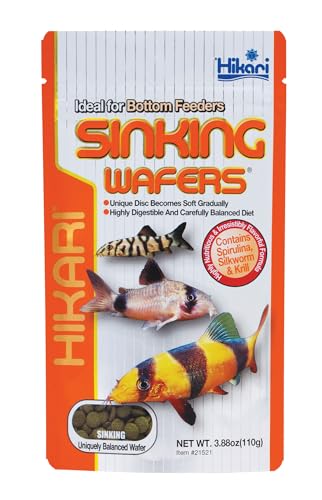 Hikari Sinking Wafers (3.88 oz)The standard sinking wafer for corydoras; feed alongside mid-water flakes so every layer of the community eats.Check price on Amazon →
 Aqua Natural Sugar White Sand (5 lb)Fine, barbel-safe sand for corydoras to sift through. Seeded with nitrifying bacteria for faster cycling.Check price on Amazon →
 AQUANEAT Bio Sponge Filter (up to 20 gal)Gentle flow that won't blow corydoras or shrimp around. Safe for fry and shrimplets in a community tank.Check price on Amazon →
FAQ
- Can corydoras live with bettas?
- Usually yes. Corydoras stay on the bottom and ignore the betta, and bettas rarely bother bottom dwellers. A planted 10-gallon or larger works best. The betta is the wild card; some individuals are too aggressive for any tank mate.
- Can corydoras live with shrimp?
- Yes. Corydoras are not predators. They ignore adult cherry shrimp entirely. Dense plant cover protects shrimplets. Shrimp appeared in 104 of the 525 real cory keeper tanks that named their livestock — the most common companion in our dataset.
- Are tiger barbs OK with corydoras?
- No. Tiger barbs are fin nippers that harass bottom dwellers. Even though corydoras lack long fins, the constant chasing stresses them into hiding and not eating.
- What is the best tank mate for corydoras?
- Neon tetras or ember tetras. Both are peaceful, share the 72-80 F and pH 6.0-7.0 range, and occupy the mid-water column while corydoras stay on the bottom. Zero conflict.
Sources
- Corydoras aeneus (Bronze Corydoras), FishBase. View source ↗
- Corydoras aeneus, Seriously Fish. View source ↗
- ScotCat catfish factsheets, ScotCat (electronic publication) (2025). View source ↗
- The Complete Aquarium Book.

Freshwater aquarist of 8+ years.