What Do Corydoras Eat?
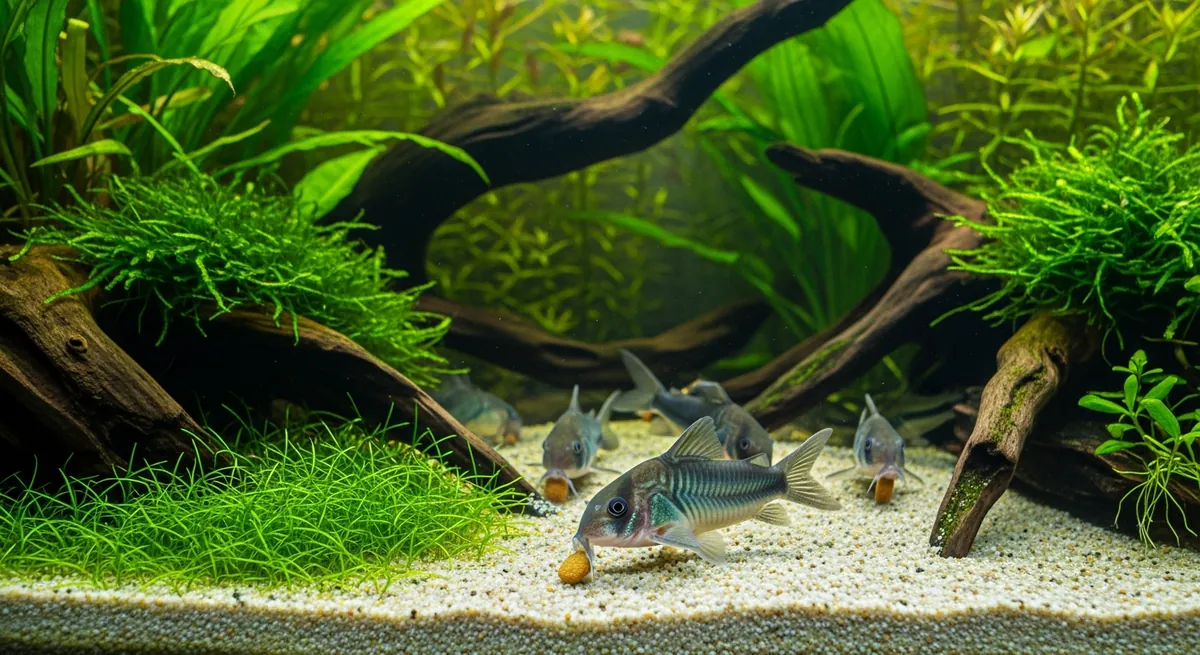
Short answer: Corydoras do not eat algae. They are omnivorous bottom feeders that need sinking pellets or wafers as a staple, supplemented with frozen bloodworms and blanched vegetables. Feed them directly; leftovers alone are not enough.
Corydoras catfish at a glance
- Scientific name
- Corydoras sp.
- Adult size
- ~2.5″
- Temperature
- 72–80°F
- pH
- 6–7.5
- Minimum tank
- 20 gal
- Temperament
- peaceful
- Social
- schooling — keep 6+
- Reference
- Wikipedia
Corydoras do not eat algae. They are omnivorous bottom feeders that sift the substrate for worms, insect larvae, and organic scraps.2 In the aquarium, they need sinking pellets or wafers fed directly to them. Leftovers from surface-feeding fish are not enough.
The myth probably started because corydoras are often sold as “cleanup crew.” The classic aquarium author William T. Innes described them as “principally a ground-feeder” and “something of an aquarium scavenger.”1 That part is true: they do clean up missed food on the bottom. But scavenging scraps and eating algae are different things entirely.
What corydoras actually eat
FishBase classifies corydoras as omnivores.2 In the wild, they forage along river and stream beds for:
- Insect larvae (bloodworms, mosquito larvae)
- Small worms and crustaceans
- Plant matter and detritus (decaying organic material, not live algae)
- Biofilm on rocks and wood
In the aquarium, a solid corydoras diet looks like this:
| Food | Type | Frequency |
|---|---|---|
| Sinking wafers or pellets | Staple | Daily |
| Frozen bloodworms | Protein supplement | 2-3x per week |
| Frozen brine shrimp | Protein supplement | 1-2x per week |
| Blanched zucchini or cucumber | Vegetable supplement | 1-2x per week |
| Leftover flake from above | Bonus, not a meal | Incidental |
Feed after lights-out or when the other fish are eating at the surface. Corydoras are slow, methodical feeders. Faster tankmates steal sinking food if given the chance.
Do corydoras eat algae?
No. Corydoras may scrape at biofilm (a thin layer of bacteria and microorganisms on hard surfaces), but they do not graze algae. True algae eaters like otocinclus, nerite snails, and amano shrimp have specialized mouthparts for the job. Corydoras have downward-facing barbels built for sifting sand, not scraping glass.4
Confusing corydoras with algae eaters leads to underfeeding. A group of six corys that gets nothing but whatever drifts to the bottom will slowly lose weight. Their bellies should be gently rounded, not concave.
How much and when to feed
A group of six corydoras in a 20-gallon tank needs about one to two sinking wafers per feeding, once or twice a day. The food should be gone within a few hours. Wafers still sitting after six hours mean you are overfeeding.
Watch their body shape. A healthy, well-fed cory has a slightly rounded belly. Pinched or concave bellies mean the group is not getting enough, even if the tank looks clean. Keep the water parameters stable and the sand substrate clean; food that rots on the bottom spikes ammonia right where the corys sit.
Check your exact stocking
Add your fish below to see stocking %, filtration load and compatibility for your setup — live.
Planning a Corydoras catfish tank. We start with your corydoras catfish and filter the list to compatible tankmates — untick to see every species (incompatible ones get flagged).
Stocking — under 85% comfortable · 85–100% full · over 100% overstocked
Show the math
Gear for this setup
As an Amazon Associate AquaGauge earns from qualifying purchases. Some links below are affiliate links, at no extra cost to you. Current price and availability are shown on Amazon. Disclosure.
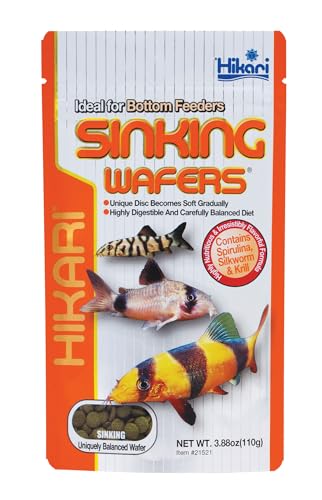 Hikari Sinking Wafers (3.88 oz)The go-to sinking wafer for corydoras; breaks apart slowly so the whole group grazes.Check price on Amazon →
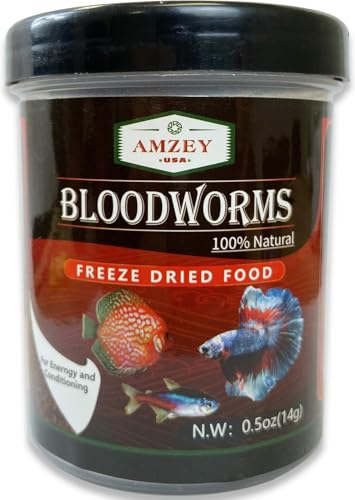 Amzey Freeze Dried Blood Worms (0.5 oz)High-protein supplement; drop a pinch after lights-out two to three times a week.Check price on Amazon →
 Ultra Fresh Tropical Shrimp Pie (2.05 oz)Shrimp-based sinking disc with natural protein; a good rotation alongside Hikari wafers.Check price on Amazon →
FAQ
- Do corydoras eat algae?
- No. Corydoras are omnivorous bottom feeders, not algae eaters. They may nibble biofilm on surfaces, but they do not graze algae the way plecos or otocinclus do. Feed them sinking food directly.
- What is the best food for corydoras?
- Sinking wafers or pellets as a daily staple, supplemented two to three times a week with frozen bloodworms or brine shrimp. They also accept blanched zucchini and cucumber.
- How often should I feed corydoras?
- Once or twice a day. Drop sinking food after lights-out or when other fish are occupied higher in the tank, so the corys get their share before it is taken.
- Can corydoras survive on leftover food alone?
- No. Leftovers rarely reach the bottom in enough quantity to sustain a group. Corydoras need their own sinking food to stay healthy.
Sources
- The Complete Aquarium Book.
- Corydoras aeneus (Bronze Corydoras), FishBase. View source ↗
- Corydoras aeneus, Seriously Fish. View source ↗
- ScotCat catfish factsheets, ScotCat (electronic publication) (2025). View source ↗

Freshwater aquarist of 8+ years.