Cherry Shrimp Dying After Water Change
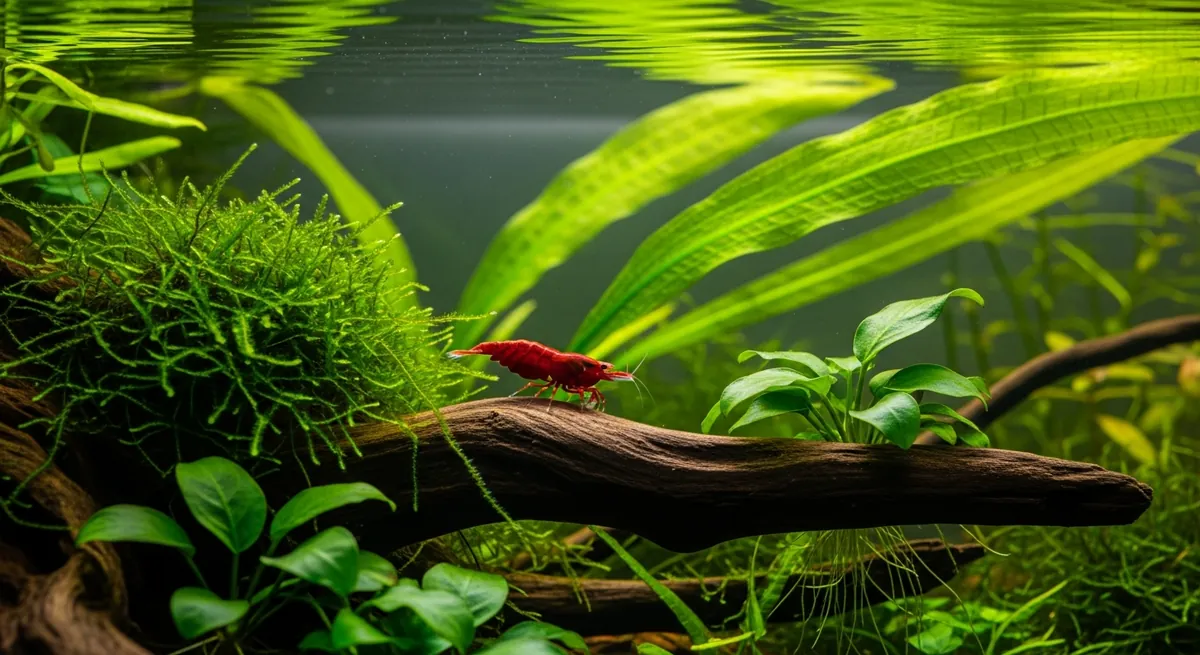
Short answer: Cherry shrimp die after water changes because the swap shifts pH, temperature, or mineral content faster than they can adapt. Across 109 real shrimp tanks, the median pH is 7.2 (IQR 6.8-7.6) and the median temp is 75 F (IQR 72-78). Keeping the new water within those bands prevents post-change deaths.
Cherry shrimp at a glance
- Scientific name
- Neocaridina davidi
- Adult size
- ~0.6″
- Temperature
- 65–80°F
- pH
- 6.5–8
- Minimum tank
- 5 gal
- Temperament
- peaceful
- Social
- schooling — keep 6+
- Reference
- Wikipedia
Cherry shrimp die after water changes because the swap shifts pH, temperature, or mineral content faster than they can adapt. The water itself is not the problem. The speed of the change is. Across 172 real shrimp tanks in the AquaGauge dataset (July 2026 snapshot), the parameters that keep cherry shrimp alive sit in tight, stable bands. Break those bands in one pour and you get osmotic stress, forced molts, and dead shrimp within 24-48 hours.
What stable shrimp tanks actually look like
| Parameter | N (tanks) | Median | IQR (Q1-Q3) | Full range |
|---|---|---|---|---|
| pH | 109 | 7.2 | 6.8-7.6 | 5.0-8.2 |
| Temperature (F) | 40 | 75 | 72-78 | 68-80 |
| Ammonia (ppm) | 85 | 0 | 0-0 | 0-50 |
| Nitrite (ppm) | 81 | 0 | 0-0.005 | 0-30 |
| Nitrate (ppm) | 99 | 5 | 0-10 | 0-80 |
The numbers show two things. First, healthy shrimp tanks are stable and clean: ammonia and nitrite sit at zero, nitrate stays low (92% of tanks at or below 20 ppm). Second, the ranges are narrow. The IQR for pH is less than one full unit. The IQR for temperature is 6 F. That is the window shrimp live in. Push them outside it in minutes and they crash.
Why a water change kills shrimp (and not fish)
Neocaridina davidi are invertebrates. They do not osmoregulate the way fish do. Fish actively pump ions through their gills to maintain internal balance when external conditions shift. Shrimp rely more on passive equilibrium with the water around them. When you swap 50% of their water with tap that differs in pH by 0.5, GH by 4 degrees, and temperature by 5 F, the shrimp’s body cannot adjust fast enough.
The immediate response is a stress molt. The shrimp sheds its exoskeleton to try to re-equilibrate. But molting requires calcium (from GH) and stable conditions. If the new water is softer than the old, the shrimp cannot harden its new shell. That is the white ring of death: a pale band between the head and body where the new exoskeleton failed to seal. The shrimp dies within hours.
Fish survive the same water change because they actively regulate their internal chemistry. That is why your tetras look fine after a 50% swap that killed half your shrimp colony.
The three parameter shifts that kill shrimp
1. Temperature mismatch
The median shrimp tank runs 75 F (IQR 72-78). Cold tap water in winter can be 55-60 F. Pouring that directly into the tank drops the temperature by several degrees in seconds. Match the new water to within 1-2 F of the tank before adding it. A thermometer and a bucket left to reach room temp (or adjusted with hot water) is enough.
2. pH swing
Across 109 tanks, the median pH is 7.2 with an IQR of 6.8-7.6. If your tap water is pH 8.0 and your tank (buffered by substrate or botanicals) sits at 6.8, a 50% change slams the pH up by 0.6 units in one pour. That is a massive shift for an animal that cannot compensate actively. Test your tap pH and your tank pH. If they differ by more than 0.3, do smaller changes more often.
Ammonia toxicity also scales with pH.1 Higher pH converts more ammonium (NH4+, less toxic) into ammonia (NH3, acutely toxic). A water change that raises pH from 6.8 to 7.4 also makes any residual ammonia more dangerous. In a cycled tank ammonia is zero (median 0 ppm across 85 shrimp tanks), so this matters most during cycling or after overfeeding.
3. GH/KH and TDS swing
GH (general hardness) supplies the calcium and magnesium shrimp need for molting. KH (carbonate hardness) buffers pH. TDS (total dissolved solids) is the overall mineral load. Cherry shrimp do best at GH 6-8 and KH 2-4. If you use RO or very soft tap water without remineralizing, the new water strips minerals from the tank. The shrimp responds with a stress molt it cannot complete.
If you remineralize, mix the remineralizer into the new water and test TDS before adding it to the tank. Match within 10-20 ppm of the tank’s current TDS.
How to do a water change without killing shrimp
- Change less water. 10-20% weekly is enough for most shrimp tanks. Nitrate stays below 20 ppm in 92% of shrimp tanks in the dataset, so large swaps are rarely needed. See how often to change aquarium water for the full nitrate-driven approach.
- Match temperature. Thermometer in the bucket, adjust to within 1-2 F of the tank.
- Dechlorinate. Chlorine and chloramine are acutely lethal to invertebrates. Dose a conditioner (Seachem Prime or equivalent) in the new water before it touches the tank.
- Match minerals. If you use RO, remineralize to the same GH/TDS as the tank. If you use tap, test GH once to confirm it is in the 6-8 range.
- Add slowly. Drip or pour gently over 10-15 minutes rather than dumping. This gives shrimp time to adjust to any remaining difference.
- Skip the gravel vac near berried females. Mechanical disturbance plus a parameter shift is a double hit. Vacuum a different section each week.
When shrimp deaths are not about the water change
If shrimp die days after a change with matched parameters, look for other causes:
- Copper. Some tap water carries trace copper, especially from new pipes. Copper is lethal to invertebrates at concentrations fish tolerate. A copper test kit or a carbon block filter on your water source rules this out.
- Pesticide or spray residue. Bug spray, air freshener, or cleaning products near the tank introduce airborne toxins that settle on the water surface.
- Old tank syndrome. If you skip water changes for months and then do a large one, the accumulated TDS and pH buffer in the old water are replaced all at once. The fix is to resume changes gradually: 10% every few days for two weeks, then return to a normal 10-20% weekly schedule.
How we counted
We parsed water-parameter posts from r/shrimptank where keepers reported test results from real tanks. N varies by parameter because not every post includes every reading. The dataset reflects what hobbyists actually measure at home with liquid test kits, not controlled lab conditions. For the full breakdown of each parameter, see cherry shrimp water parameters. Full methodology: How we collect and verify tank data. Figures are from the July 2026 snapshot (6,414 tanks total).
Check your exact stocking
Add your fish below to see stocking %, filtration load and compatibility for your setup — live.
Planning a Cherry shrimp tank. We start with your cherry shrimp and filter the list to compatible tankmates — untick to see every species (incompatible ones get flagged).
Stocking — under 85% comfortable · 85–100% full · over 100% overstocked
Show the math
Gear for this setup
As an Amazon Associate AquaGauge earns from qualifying purchases. Some links below are affiliate links, at no extra cost to you. Current price and availability are shown on Amazon. Disclosure.
 Seachem Prime Water Conditioner (500 ml)Instantly neutralizes chlorine and chloramine in replacement water so every change is safe for shrimp.Check price on Amazon →
 PAIZOO Digital Aquarium ThermometerSticks to the glass and reads to 0.9 F so you can match replacement water temperature before pouring.Check price on Amazon →
FAQ
- Why did my cherry shrimp die after a water change?
- The most common cause is a parameter swing: a sudden shift in pH, temperature, or mineral content (GH/KH/TDS). Shrimp are more sensitive to rapid changes than fish. Even a 0.5 pH jump or a 4 F temperature difference between old and new water can trigger osmotic stress and failed molts.
- How much water should I change in a shrimp tank?
- 10-20% weekly is the safest range. Across 99 real shrimp tanks, the median nitrate is just 5 ppm, so large changes are rarely needed. Smaller swaps keep parameter shifts within the range shrimp can handle.
- Do I need to match temperature for a shrimp water change?
- Yes. Match the new water to within 1-2 F of the tank. The median shrimp tank runs 75 F (IQR 72-78). A bucket of cold tap water dumped into a 75 F tank creates exactly the kind of shock that triggers deaths.
- Can water changes cause shrimp to molt and die?
- Yes. A sudden parameter shift forces an emergency molt. If the shrimp has not absorbed enough calcium (low GH) or the new water is too different, the molt fails and the shrimp dies. This is the 'white ring of death' that often appears within 24-48 hours of a large water change.
Sources
- Nitrogen and Water Quality, URI Cooperative Extension (2005). View source ↗

Freshwater aquarist of 8+ years.