Cherry Shrimp Molting Problems
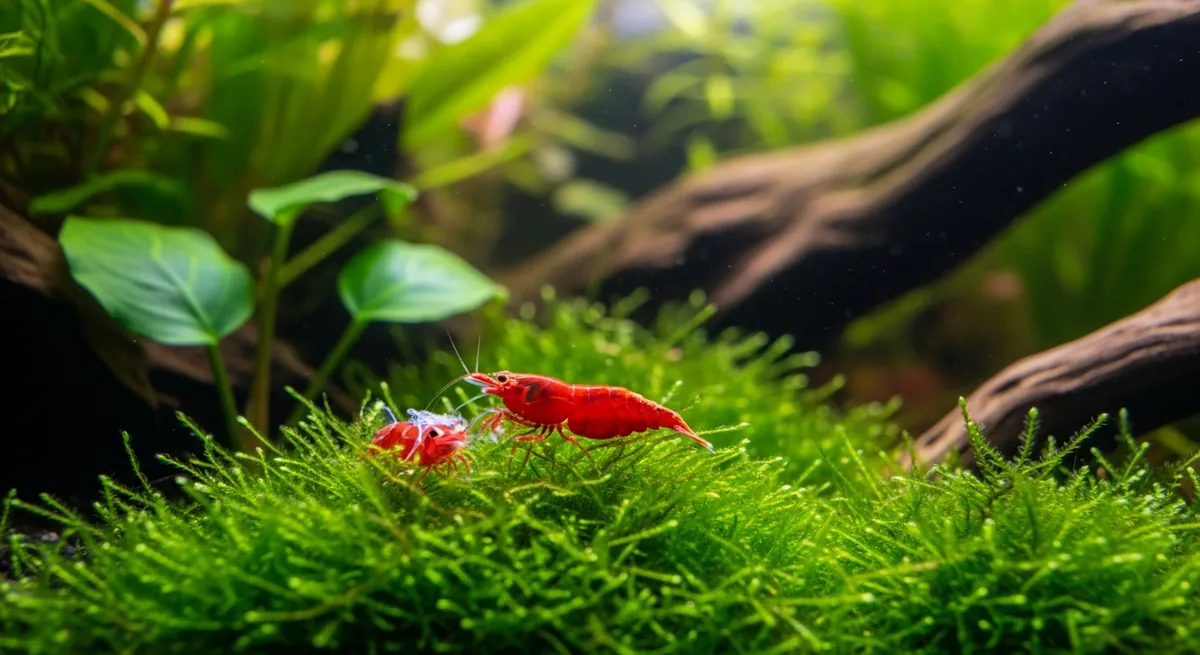
Short answer: The white ring of death in cherry shrimp is a failed molt caused by mineral deficiency or parameter swings. Across 521 real shrimp tanks, keepers who maintain stable GH, near-zero ammonia (median 0 ppm, n=85), and steady temperature (median 75 F, n=40) rarely see molting failures.
Cherry shrimp at a glance
- Scientific name
- Neocaridina davidi
- Adult size
- ~0.6″
- Temperature
- 65–80°F
- pH
- 6.5–8
- Minimum tank
- 5 gal
- Temperament
- peaceful
- Social
- schooling — keep 6+
- Reference
- Wikipedia
The white ring of death is a white band behind the head where a cherry shrimp’s old exoskeleton cracked but never separated. The shrimp is stuck mid-molt and almost always dies. The cause is either not enough dissolved minerals (low GH) for the new shell, or a sudden parameter swing that forced the molt before the shrimp was ready.
Across 521 real shrimp tanks in the AquaGauge dataset (July 2026 snapshot), the keepers whose shrimp molt without trouble share a pattern: stable water, adequate hardness, and clean chemistry.
What real shrimp keepers actually maintain
| Parameter | n | Median | IQR (25th-75th) | Key stat |
|---|---|---|---|---|
| Ammonia (ppm) | 85 | 0 | 0-0 | Any detectable ammonia stresses shrimp pre-molt |
| Nitrite (ppm) | 81 | 0 | 0-0.005 | Must stay at zero in a cycled tank |
| Nitrate (ppm) | 99 | 5 | 0-10 | 92% of tanks stay at or below 20 ppm |
| pH | 109 | 7.2 | 6.8-7.6 | 69% fall in the 7.0-8.0 range |
| Temperature (F) | 40 | 75 | 72-78 | Stability matters more than the exact number |
These baselines come from r/shrimptank posts where keepers shared their test-kit results. The full parameter breakdown is in the cherry shrimp water parameters page.
Why the white ring happens
Cherry shrimp (Neocaridina davidi) build a new exoskeleton underneath the old one before each molt. That process requires calcium and magnesium pulled from the water column. When GH is too low (below roughly 4-5 dGH), the new shell forms too thin. The old shell cracks at the weakest joint behind the carapace, but the soft new shell cannot hold its shape. The shrimp gets stuck and dies.
The second trigger is a forced molt. A sudden shift in pH, temperature, or TDS tells the shrimp’s endocrine system to shed immediately. If the new shell is not ready, the result is the same white ring. This is why shrimp often die 24-48 hours after a large, unmatched water change.
How to prevent molting failures
Keep GH at 6-8 dGH. Use a GH test kit and remineralize RO or soft tap water with a shrimp-specific mineral supplement (Salty Shrimp GH/KH+ or similar). If your tap water is already 6-8 dGH, you just need to keep it stable. See the cherry shrimp care guide for the full parameter picture.
Minimize parameter swings. Small, frequent water changes (10-20% weekly) beat large, infrequent ones. Match the replacement water to within 1-2 F and 0.2 pH of the tank. The water change calculator can help estimate dilution.
Hold ammonia and nitrite at zero. Both are toxic to shrimp at any concentration. Ammonia toxicity increases with pH: at higher pH more ammonium (NH4+) converts to the acutely toxic ammonia form (NH3).1 The median across 85 real shrimp tanks is 0 ppm ammonia. If yours reads above zero, the tank is not fully cycled or is overstocked, and that stress alone can trigger failed molts.
Avoid temperature extremes. The median shrimp tank runs 75 F (IQR 72-78). Temperatures above 80 F accelerate metabolism and force more frequent molts, giving less recovery time between each one.
Feed mineral-rich foods occasionally. Blanched spinach, kale, or a mineral-enriched shrimp pellet supplements what the water provides. Cuttlebone fragments also dissolve slowly and add calcium.
When molting is normal
A healthy cherry shrimp molts every 3-6 weeks. You will find translucent, empty shells on the substrate. Leave them: tankmates and the shrimp itself will eat the shell to recycle the minerals. Females molt just before breeding, and a “molting frenzy” (several shrimp molting within hours) after a small water change is normal and harmless when GH and parameters are stable. See the full cherry shrimp care guide for the broader picture.
How we counted
The statistics above come from 521 r/shrimptank posts in the AquaGauge real-tank dataset. Each row is a keeper-reported parameter (test-kit photo or stated reading). We parsed ammonia (n=85), nitrate (n=99), pH (n=109), and temperature (n=40) readings and computed medians and interquartile ranges. No values were invented or averaged from secondary sources. Figures are from the July 2026 snapshot (6,414 tanks total).
Sample source posts: r/shrimptank, e.g. 1, 2.
Check your exact stocking
Add your fish below to see stocking %, filtration load and compatibility for your setup — live.
Planning a Cherry shrimp tank. We start with your cherry shrimp and filter the list to compatible tankmates — untick to see every species (incompatible ones get flagged).
Stocking — under 85% comfortable · 85–100% full · over 100% overstocked
Show the math
Gear for this setup
As an Amazon Associate AquaGauge earns from qualifying purchases. Some links below are affiliate links, at no extra cost to you. Current price and availability are shown on Amazon. Disclosure.
 SaltyShrimp GH/KH+ Remineralizer (100 g)Adds calcium and magnesium to RO or soft tap water so shrimp can build strong exoskeletons between molts.Check price on Amazon →
 Crystalpro Shrimp Minerals (4.2 oz)Liquid trace-element supplement for Neocaridina and Caridina that supports molting and breeding.Check price on Amazon →
FAQ
- What is the white ring of death in cherry shrimp?
- A white band that appears behind the head where the old exoskeleton cracked but did not separate. The shrimp cannot finish the molt and usually dies within 24-48 hours. It signals that the shell was too brittle (low GH) or the molt was forced by a parameter swing.
- What GH do cherry shrimp need to molt safely?
- Most keepers aim for GH 6-8 (roughly 100-140 ppm). Calcium and magnesium in the water supply the minerals shrimp deposit into the new shell before shedding the old one. Below GH 4, the new exoskeleton may be too soft to hold together.
- Can a water change cause the white ring of death?
- Yes. A large water change that shifts pH, temperature, or mineral content forces an emergency molt. If GH is already low, the shrimp cannot build a strong replacement shell fast enough. Keep changes to 10-20% weekly and match parameters.
- How often do cherry shrimp molt?
- Healthy adults molt every 3-6 weeks. Juveniles molt more often because they are growing. Each molt is normal and takes only minutes when minerals and stability are right.
Sources
- Nitrogen and Water Quality, URI Cooperative Extension (2005). View source ↗

Freshwater aquarist of 8+ years.