Bristlenose Pleco Care
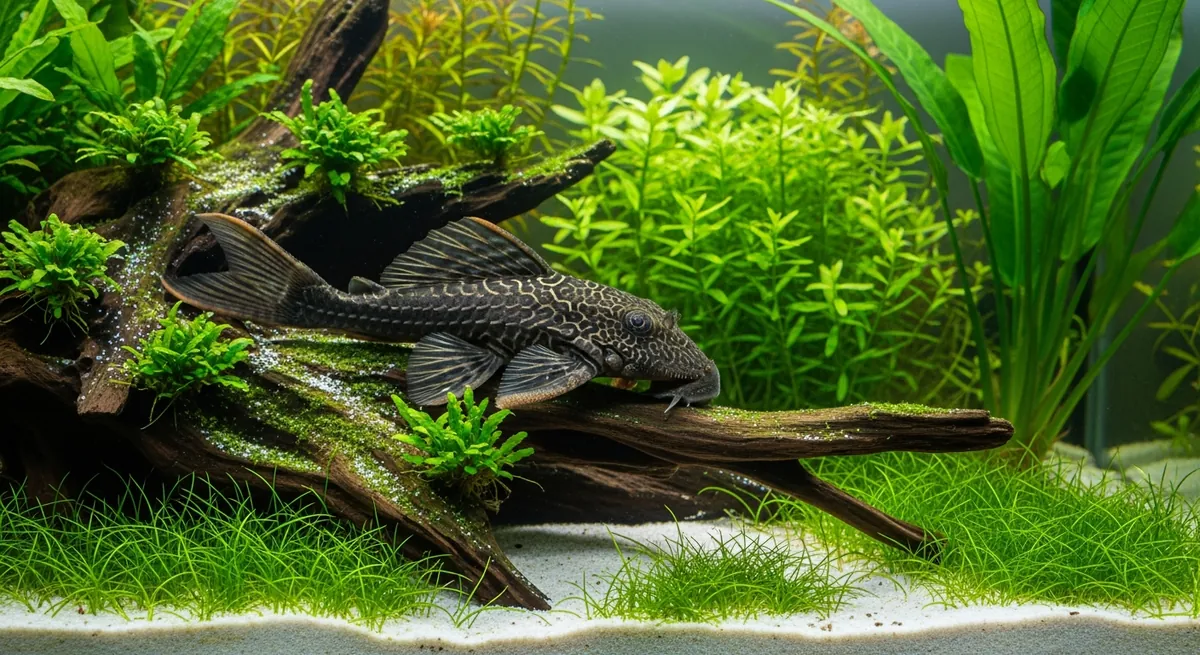
Short answer: Bristlenose plecos (Ancistrus) are the small, hardy algae-eating pleco that won't outgrow your tank — unlike the common pleco. Keep one in a 20-gallon or larger (real keepers average ~29), on driftwood, and feed it more than algae. They stay 4-5 inches and breed readily in caves.
Bristlenose pleco at a glance
- Scientific name
- Ancistrus sp.
- Adult size
- ~5″
- Temperature
- 70–79°F
- pH
- 6–7.5
- Minimum tank
- 20 gal
- Temperament
- peaceful
- Social
- can be kept singly
- Reference
- Wikipedia
Bristlenose plecos (Ancistrus) are the pleco to buy. They are a small, hardy algae-eater that stays 4-5 inches and won’t outgrow your tank the way a common pleco does. (The common pleco reaches 18-24 inches.)2 Keep one in a 20-gallon or larger, give it driftwood, and feed it more than algae.
Like other Ancistrus, they are facultative air-breathers, so an occasional dash to the surface for a gulp of air is normal.1
Bristlenose pleco at a glance
| Attribute | Bristlenose (Ancistrus) |
|---|---|
| Adult size | 4-5 in (10-12.5 cm)2 |
| Minimum tank | 20 gal (real-keeper median ~29)2 |
| Temperature | 70-79 °F (21-26 °C)2 |
| pH | 5.5-7.52 |
| Diet | Omnivore: algae + veg + protein2 |
| IUCN status | Least Concern1 |
Authority ranges from FishBase + Seriously Fish. Tank-size "real-keeper median" = 457 tank-size mentions across bristlenose threads on Reddit (r/pleco, r/Aquariums, r/PlantedTank): median 29 gal, 80% at 20 gal or more.

"Quite an easy species to keep as long as there is adequate aeration in the aquarium and giving them a choice of pipes, stones or rockwork."
How big do bristlenose plecos get, and what tank size
Bristlenose top out at about 4-5 inches.2 That’s the entire appeal: they do the algae-grazing job of a pleco without the common pleco’s 18-24-inch adult size and 75-gallon-plus tank. Seriously Fish puts the minimum footprint at a 60 × 30 cm base (about a 20-gallon),2 and real keepers land in the same place: across 457 tank-size mentions in bristlenose Reddit threads, the median is 29 gallons and 80% are 20 gallons or more.
So can a bristlenose live in a 10-gallon? In practice, no. They stay small but are heavy waste producers, and only about 1 in 5 keepers report a sub-20-gallon tank, usually to pushback that the bioload is too much. Treat 20 gallons as the floor, and plan the rest of the tank in the stocking calculator.
Do bristlenose plecos need driftwood?
This is the most-asked bristlenose question, and the honest answer is effectively yes. They rasp on wood and graze the biofilm it grows, which helps their digestion, and it gives them the cover they want during the day. A bristlenose can survive without it, but it does noticeably better with a piece of driftwood in the tank. Treat it as one of the first things to add, not an optional extra.
Do they really eat algae? What to feed
They graze algae and biofilm, but they cannot live on it alone. A bristlenose is an omnivore that needs a varied diet: algae wafers, vegetables (cucumber, courgette), and some protein such as sinking pellets and occasional frozen bloodworm or prawn.23 The single most common bristlenose mistake is buying one as a self-feeding “clean-up crew” and slowly starving it once the tank’s algae runs out.
Water and setup
Bristlenose are hardy and adapt to most tropical tanks: 70-79 °F, pH 5.5-7.5.2 What they don’t tolerate is dirty water. They’re sensitive to organic waste, so give them clean, well-oxygenated water with good flow, plus driftwood and a cave or two (a chipped flowerpot or hollow log works).3 Soft sand or smooth gravel is fine.
Lifespan and breeding
Well kept, a bristlenose commonly lives 5-12 years, so treat it as a long-term fish, not a disposable algae tool.
Breeding is famously easy. They are cave-spawners: a male claims a cave, the female lays inside, and the male guards and fans the eggs. In a mature, well-fed tank juveniles often appear without any intervention.23 If you keep a male and female together, plan on fry, and on finding homes for them.
Bristlenose vs common pleco
If a shop offers you a “pleco,” check which one. The common pleco (Hypostomus) reaches 18-24 inches and needs a 75-125-gallon tank, so most end up rehomed or worse. The bristlenose stays 4-5 inches and thrives in a 20-gallon. For nearly every home aquarium, the bristlenose is the right choice; see what size tank a pleco needs for the full size-by-species picture.
Check your exact stocking
Add your fish below to see stocking %, filtration load and compatibility for your setup — live.
Planning a Bristlenose pleco tank. We start with your bristlenose pleco and filter the list to compatible tankmates — untick to see every species (incompatible ones get flagged).
Stocking — under 85% comfortable · 85–100% full · over 100% overstocked
Show the math
Gear for this setup
As an Amazon Associate AquaGauge earns from qualifying purchases. Some links below are affiliate links, at no extra cost to you. Current price and availability are shown on Amazon. Disclosure.
 Hikari Algae Wafers (8.8 oz)The everyday staple for a bristlenose; sinks fast and holds together so they can rasp it over hours.Check price on Amazon →
 Natural Wood Aquarium CaveDriftwood + a breeding cave in one — bristlenose rasp the wood, graze its biofilm, and males spawn inside it.Check price on Amazon →
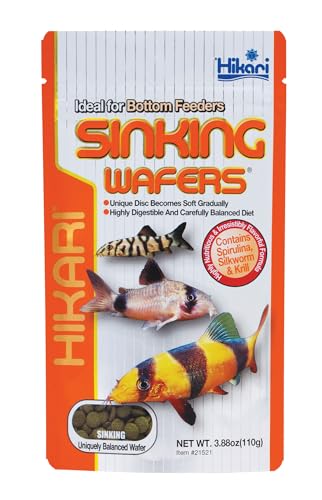 Hikari Sinking Wafers (3.88 oz)Adds the protein and variety a bristlenose needs beyond algae — they are omnivores, not pure grazers.Check price on Amazon →
FAQ
- Can a bristlenose pleco live in a 10-gallon tank?
- Not comfortably. They stay small (4-5 inches) but produce a lot of waste, so a 20-gallon is the practical minimum. Across bristlenose discussions on Reddit the median tank is about 29 gallons, and 80% are 20 gallons or larger — keepers consistently push back on 10-gallon setups as too small for the bioload.
- Do bristlenose plecos need driftwood?
- Effectively yes. They rasp on wood and graze the biofilm it grows, which aids their digestion, and it gives them cover. A bristlenose can survive without driftwood, but it does noticeably better with a piece in the tank — it is one of the most-recommended additions for the species.
- Do bristlenose plecos really eat algae?
- They graze algae and biofilm, but they cannot live on it alone. Feed algae wafers plus vegetables (cucumber, courgette) and some protein (sinking pellets, occasional bloodworm or prawn). Treating one as a self-feeding 'clean-up crew' slowly starves it.
- How big do bristlenose plecos get?
- About 4-5 inches (10-12.5 cm) — far smaller than the common pleco, which reaches 18-24 inches. That size is the whole reason to choose a bristlenose for a normal home aquarium.
- Do bristlenose plecos breed easily?
- Yes, famously so. They are cave-spawners: the male claims a cave and guards the eggs, and in a mature tank juveniles often appear without any intervention. If you keep a male and female, expect fry.
Sources
- Ancistrus cirrhosus (Bristlenose), FishBase. View source ↗
- Ancistrus sp. '3' (Common Bristlenose Catfish), Seriously Fish. View source ↗
- ScotCat catfish factsheets (Ancistrus), ScotCat (electronic publication) (2025). View source ↗

Freshwater aquarist of 8+ years.