Betta Tank Water Parameters (Temp + pH)
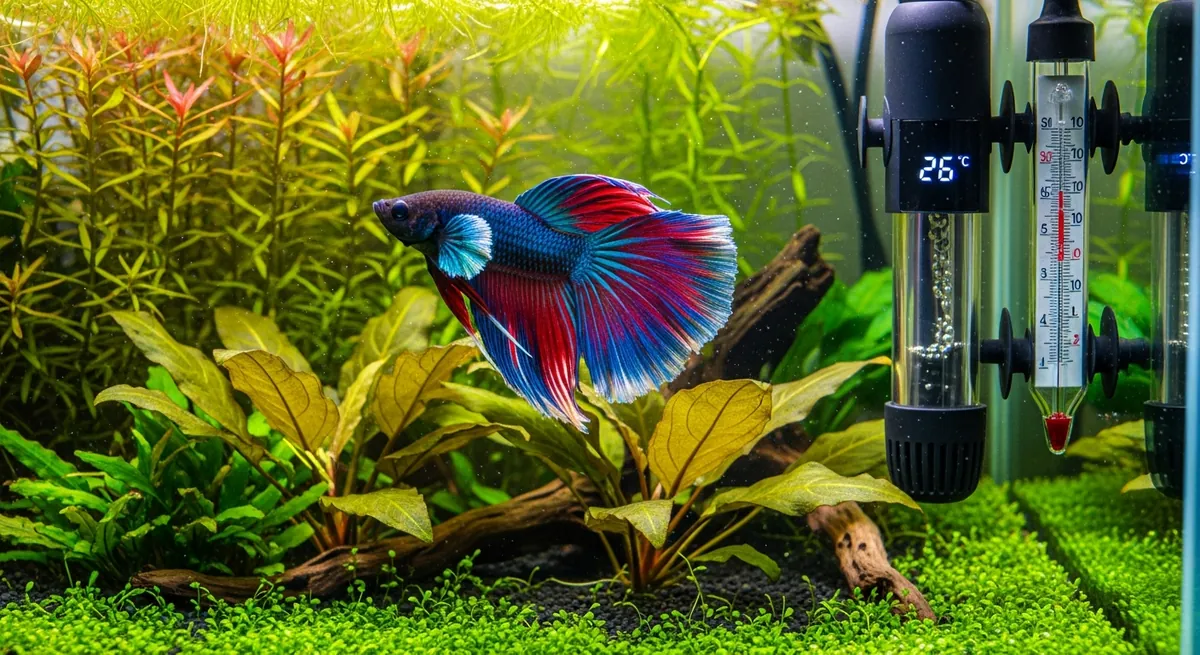
Short answer: Real betta keepers run 79°F and pH 7.4. Across 70 temperature readings and 104 pH readings from r/bettafish, the median temp is 79°F (IQR 78-80) and the median pH is 7.4 (IQR 7.0-7.6). Here is what the numbers actually look like.
Betta at a glance
- Scientific name
- Betta splendens
- Adult size
- ~2.5″
- Temperature
- 76–82°F
- pH
- 6.5–7.5
- Minimum tank
- 5 gal
- Temperament
- aggressive
- Social
- can be kept singly
- Reference
- Wikipedia
Real betta keepers run their tanks at 79°F and a pH of 7.4. Those are the medians across 70 temperature readings and 104 pH readings in the AquaGauge dataset (July 2026 snapshot), compiled from r/bettafish posts where keepers shared their actual water test results. The numbers land tighter than most care guides suggest.
What real betta keepers actually measure
| Parameter | N (tanks) | Median | Mean | IQR | Full range |
|---|---|---|---|---|---|
| Temperature (°F) | 70 | 79 | 78.9 | 78-80 | 72-84 |
| pH | 104 | 7.4 | 7.3 | 7.0-7.6 | 5.0-8.8 |
The temperature cluster is narrow: the middle half of tanks sits between 78 and 80°F. The pH distribution is wider but still centered. 81% of readings fall between 7.0 and 8.0.
Why 78-80°F matters
Bettas are tropical labyrinth fish from shallow, warm water in Southeast Asia. The classic aquarium author William T. Innes described them as part of a warm-water group: “Labyrinth fishes are rather quarrelsome as a rule (except Dwarf Gouramies) and must be kept with their own species, preferably in numbers to prevent individual duels-to-the-death.”1 Below 76°F, their metabolism slows, appetite drops, and immune function weakens. Above 84°F, dissolved oxygen drops and stress increases. The 78-80°F sweet spot keeps digestion, activity, and immune response in their working range. Innes noted the same warmth need a century ago, writing that for these fish “the temperature should be raised to at least 80 degrees Fahrenheit and kept high for the first two or three months of the existence of the young fish.”2
A 25-50 W adjustable heater holds this range in a 5-10 gallon tank. Set it to 79°F and verify with a separate thermometer. The built-in dials on budget heaters drift.
pH: stability beats a target number
The median betta pH (7.4) matches the general freshwater median almost exactly. Only 8% of betta keepers report pH below 6.5. This means most bettas live in moderately alkaline tap water and do fine. The reference database FishBase documents a tolerance range of pH 6.0-8.0 for Betta splendens, which brackets the entire interquartile range our keepers reported.3
Chasing a “perfect 7.0” with chemical buffers creates pH swings, and a swing of more than 0.3 units in a few hours stresses fish more than a steady 7.4 or 7.6. If your tap water falls between 7.0 and 7.6, leave it alone.
Driftwood and Indian almond leaves lower pH gradually (0.1-0.3 over weeks) and add tannins that bettas seem to prefer. This is a gentle approach if your pH is above 7.6.
When to worry
Test weekly with a liquid kit (not strips). Act on these thresholds:
- Temperature below 76°F or above 82°F: check heater wattage, room temp, and tank placement near windows or vents.
- pH below 6.0 or above 8.5: investigate your water source. Extreme pH amplifies ammonia toxicity (high pH) or metal solubility (low pH).
- pH swings of more than 0.3 in a day: slow down water changes, stop adding chemicals, and test your tap water to find the source of instability.
Ammonia and nitrate matter more day-to-day than pH. A betta at pH 7.6 with zero ammonia is healthier than a betta at pH 7.0 with 0.5 ppm ammonia. See the full ammonia & nitrate data for bettas.
One stocking note while you tune these numbers: a betta’s aggression is aimed at its own kind, not at the water itself. Innes put it plainly: “Betta, the Siamese Fighting-fish, can be kept with other fishes as it fights only its own kind.”1 Modern care echoes this. Seriously Fish notes that ornamental bettas are “best kept alone.”4 So keep one male, and if you add tankmates, give them stable, betta-friendly water in the ranges above.
How we counted
The AquaGauge dataset covers 6,414 real tanks logged across 12 aquarium subreddits. A tank counts toward this page if it came from r/bettafish and reported at least one water parameter — 194 betta tanks meet that bar. Of those, 70 included a temperature reading and 104 included a pH reading. Methodology and limitations are documented at /methodology/. Figures are from the July 2026 snapshot (6,414 tanks total).
Check your exact stocking
Add your fish below to see stocking %, filtration load and compatibility for your setup — live.
Planning a Betta tank. We start with your betta and filter the list to compatible tankmates — untick to see every species (incompatible ones get flagged).
Stocking — under 85% comfortable · 85–100% full · over 100% overstocked
Show the math
Gear for this setup
As an Amazon Associate AquaGauge earns from qualifying purchases. Some links below are affiliate links, at no extra cost to you. Current price and availability are shown on Amazon. Disclosure.
 hygger Small Betta Aquarium Heater (25/50 W)Dial it to 79°F and the LED display lets you hold a steady 78-80°F in a 5-10 gallon betta tank.Check price on Amazon →
FAQ
- What temperature should a betta tank be?
- 78-80°F. Across 70 real betta tanks, the median is 79°F and the middle half of tanks falls between 78 and 80°F. A stable temp in that range matters more than hitting an exact degree.
- What pH do betta fish need?
- Most bettas do fine between 7.0 and 7.6. Across 104 betta tanks, the median pH is 7.4 and 81% of readings fall between 7.0 and 8.0. Stability beats precision.
- Do I need to lower my pH for a betta?
- Probably not. Only 8% of betta keepers have pH below 6.5. If your tap water sits between 7.0 and 7.6, leave it alone. Chasing a lower number with chemicals creates swings that stress bettas more than a steady 7.4.
- Can a betta live without a heater?
- Not safely. Bettas are tropical and need 78-80°F. Room temperature in most homes drifts below 76°F, especially at night. A reliable adjustable heater is the only way to hold that range.
Sources
- The Complete Aquarium Book.
- Goldfish Varieties and Tropical Aquarium Fishes.
- Betta splendens — FishBase species summary, FishBase. View source ↗
- Betta splendens, Seriously Fish. View source ↗

Freshwater aquarist of 8+ years.